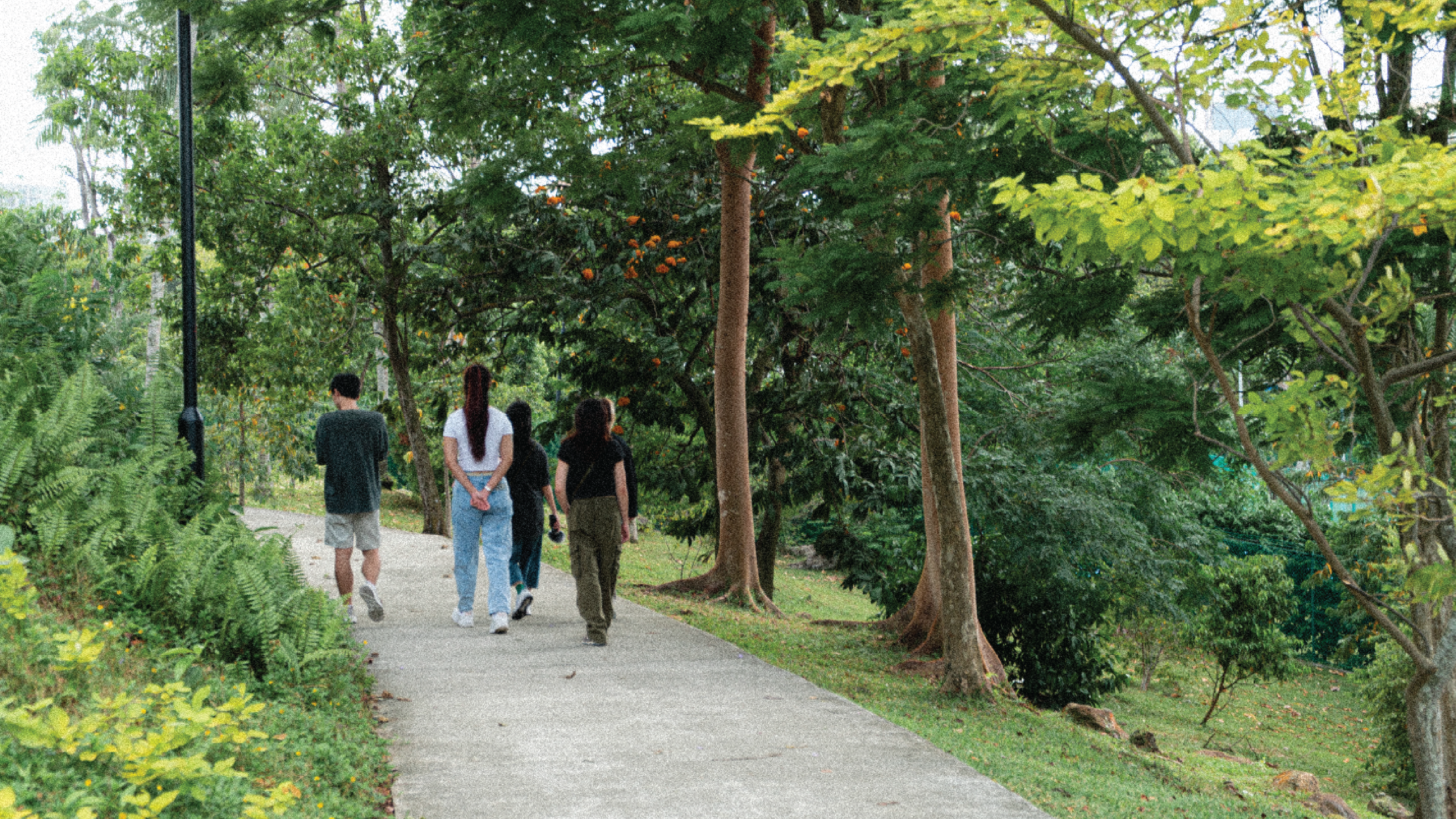
Soundwalk at Mount Emily Park
A Guided Walk
Unlike the first sound walk, the second iteration will have myself as a guide, guiding my participants on how they may listen and navigate the space around them. This time, I asked Jared to assist me in documenting by my side – as I remember the documentation for the first walk being a struggle. This time, I’ll be fully committed to walking and listening alongside the participants.
Remembering the first soundwalk: I gave the participants many things to carry, and many "tasks" to do. This included recording, drawing, writing, and taking photos of their locations. Because of this, I'm not sure if many of them actually paid full attention to listening… I noticed that many were still distracted by the visual elements in their walk, or weren't quite sure what to listen to. Which wasn't a bad thing per se, as I wanted it to be as open-ended as possible. But this time, I decided to switch it up and become a guide instead, sort of like a narrator by their side, leading them on the walk, giving verbal guidance on how they may listen or walk.
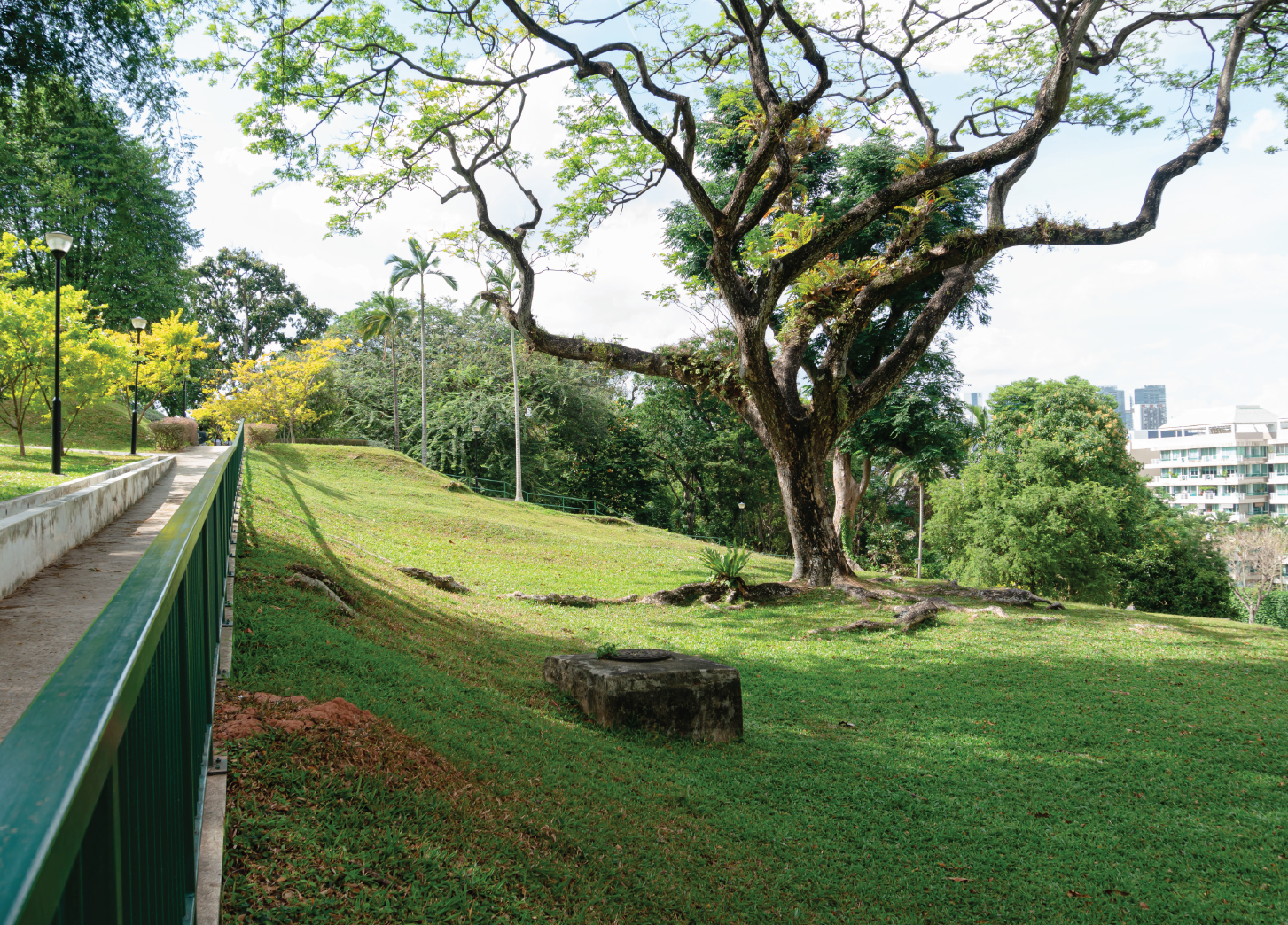
Chosen place for the second walk: Mount Emily Park
Following examples from sound artists like Hildegard Westerkamp, Elena Biserna, and the Bureau for Listening, I am slowly carving out a picture of how my second collective soundwalk might be. This time, I chose a natural location, Mount Emily Park, a short ten minutes away from school. A tranquil and peaceful location, I thought it would be a nice change of pace. My participants might focus on listening a little more, and tune in to things better.
Soundwalk responses:
(Things that should happen from the walk)
- → Drawing
- → Writing
- → Clay response
- → Sound recording
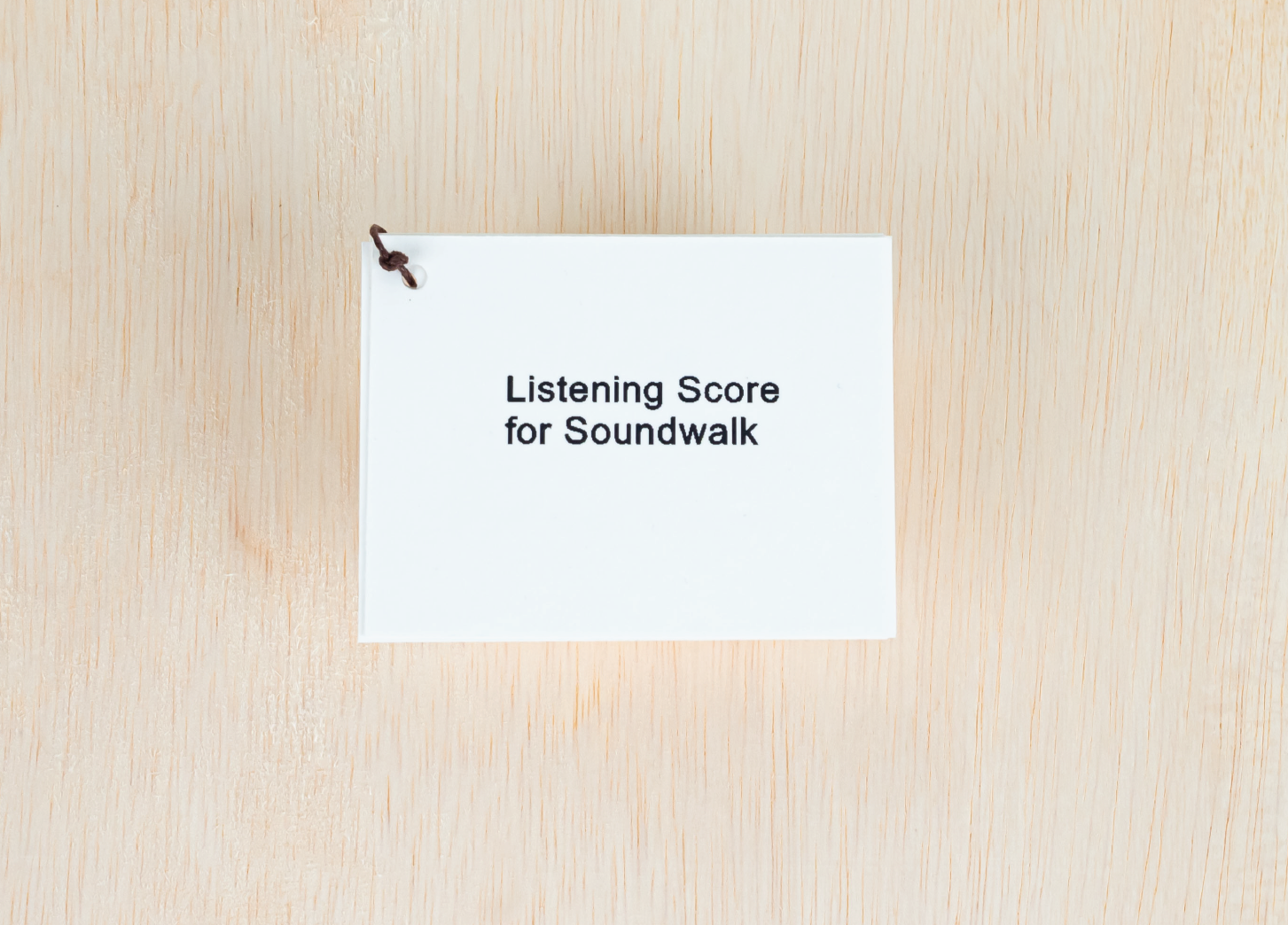
The listening score, which will be used once again
Soundwalk Flow
- 4:00 – 4:10 5–10 minutes debrief
- 4:10 – 4:30 10 minutes of walking together as a group
- 4:30 – 4:40 Reflection
- 4:40 – 5:00 Walking individually
- 5:00 – 5:10 Regroup and gather
- 5:10 – 5:20 Break and reflection
- 5:20 – 5:50 Clay making!
- 5:50 – 6:00 Reflections and ending
Questions:
Will the participants be holding anything?
How much should they follow me?
Materials as soundmaking devices?
(e.g. sticks, leaves)
Notable quotes from sound artists:
A soundwalk is any excursion whose main purpose is listening to the environment. It is exposing our ears every sound around us no matter where we are. (Soundwalking, Westerkamp)
The Second Sound Walk
This time, I led a group of four participants – a mix of old and new people. The group was kept small for a more intimate listening experience, and I found that everyone definitely paid more attention to their listening, and the sounds present around them. Being in nature is always healing; a participant even remarked that she would come back to the same park again, just to listen and relax.
Overall, the walk this time was definitely more reflective and thoughtful compared to the first. With me as a listening guide and "narrator" by their side, we walked together as a group, staying silent, simply attuning to the sounds of the environment around us. Walking together in silence, I guided their aural attention through spoken prompts: how do they notice the sound of their footsteps? How heavily do they drag their feet? What is the rhythm of their breathing in relation to the environment? Do these bodily sounds shape their listening? Were there any sounds that caught their attention, and what emotions were felt? Afterwards, participants were given time to explore the place independently and record any sounds they found interesting.
The responses came out a little different this time round.
Being in a different environment, and with more silence around, the participants were much more aware of the smaller sounds, such as leaves crunching beneath their feet, construction from afar blending in with nature, and the squeaking of the workout equipment in the park. This was reflected in their drawings and clay responses at the end of the walk.
Reflecting
Overall, I liked this soundwalk much better than the first. A participant that attended both walks also said the same; there were fewer visual and auditory distractions around, which made it easier to slow down and really listen to the environment.
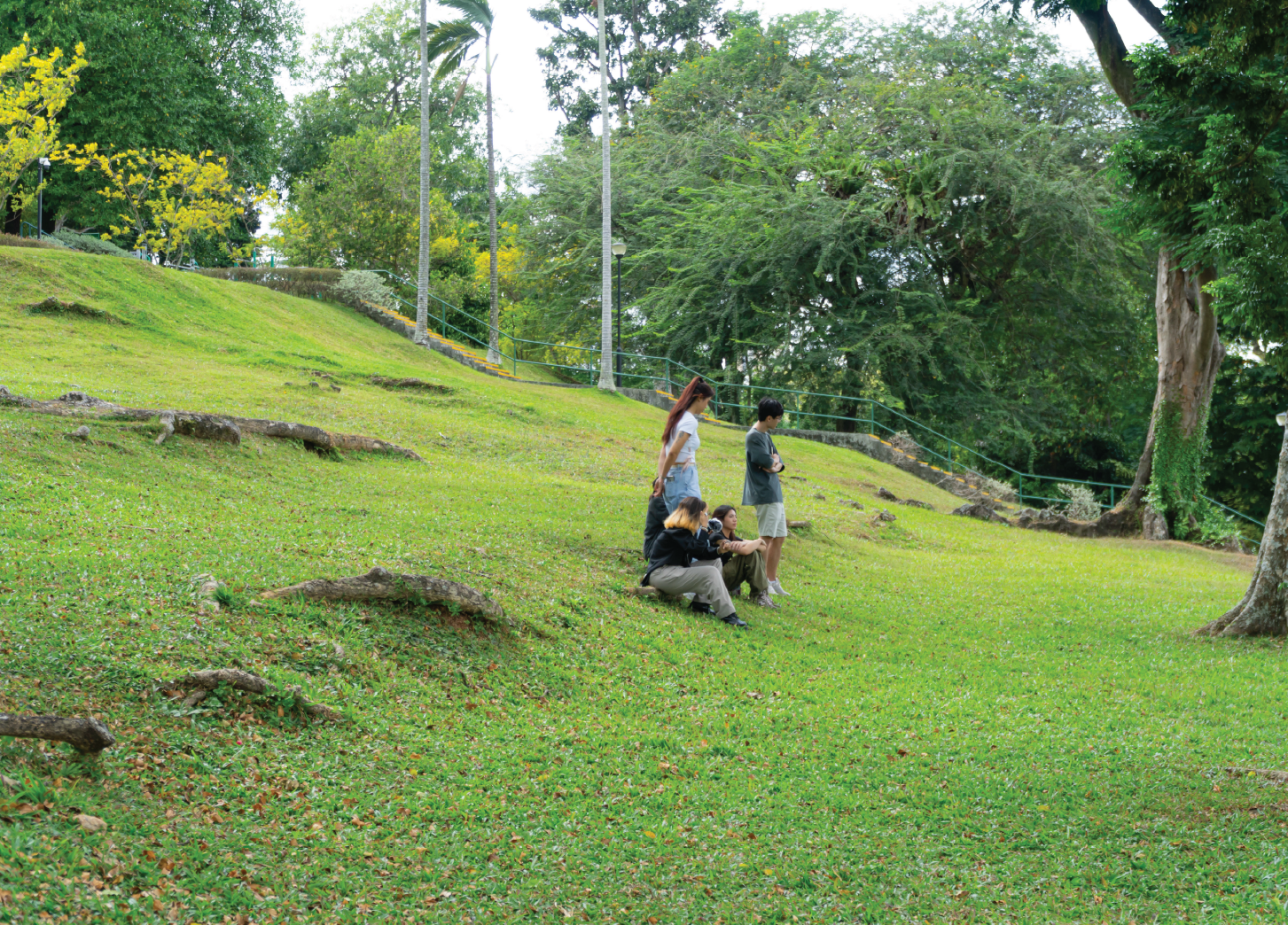
Soundwalking with a group of four
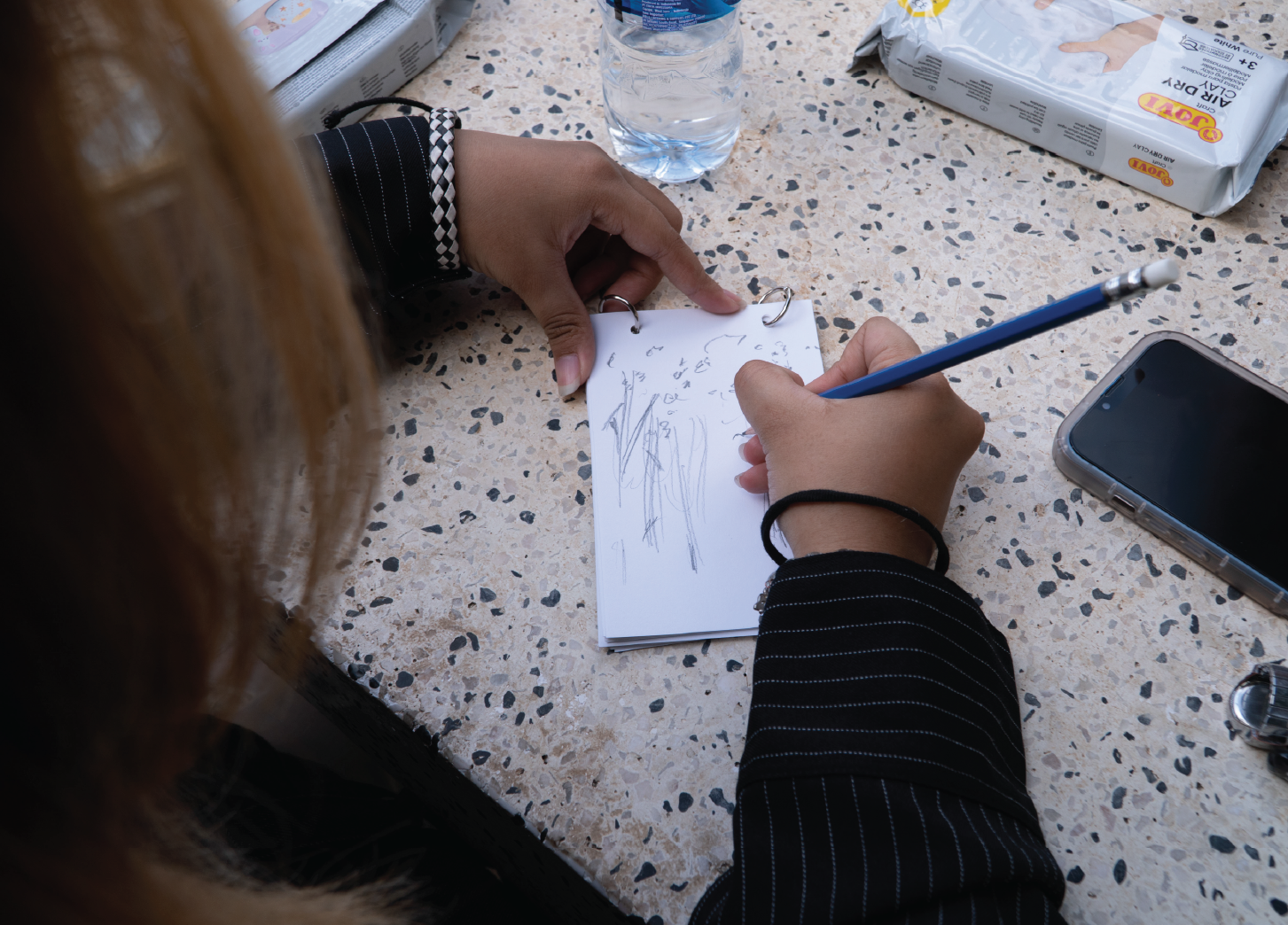
A participant drawing what they heard
The part where I walked together with the group, simply listening in silence, felt a little awkward, but I believe that with more soundwalks done, this will become a more familiar and therapeutic gesture. At the end of it all, each participant was also given a listening score, for them to bring with them wherever they go and be reminded of how they might listen in any environment, and at any time.
To think past the current soundwalk, could the soundwalk be applied for public use? Anyone can start soundwalking. Is there a possibility of adapting the walks into sound "scores," or listening probes for the public? I shall think about it more in the future.
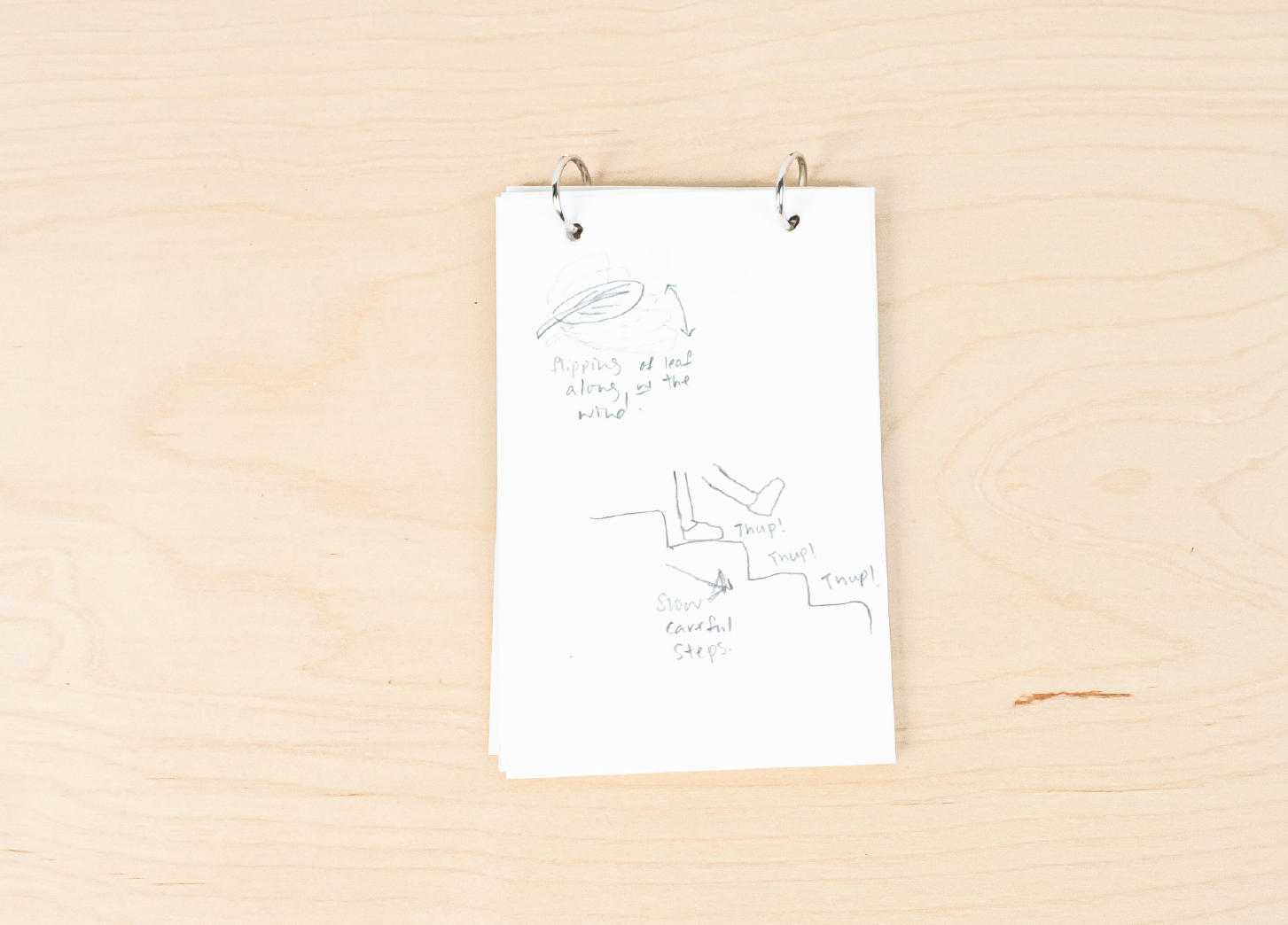
A drawing by a participant
Archive: References
Soundwalks that have been done before, Listening scores, Ways of soundwalking
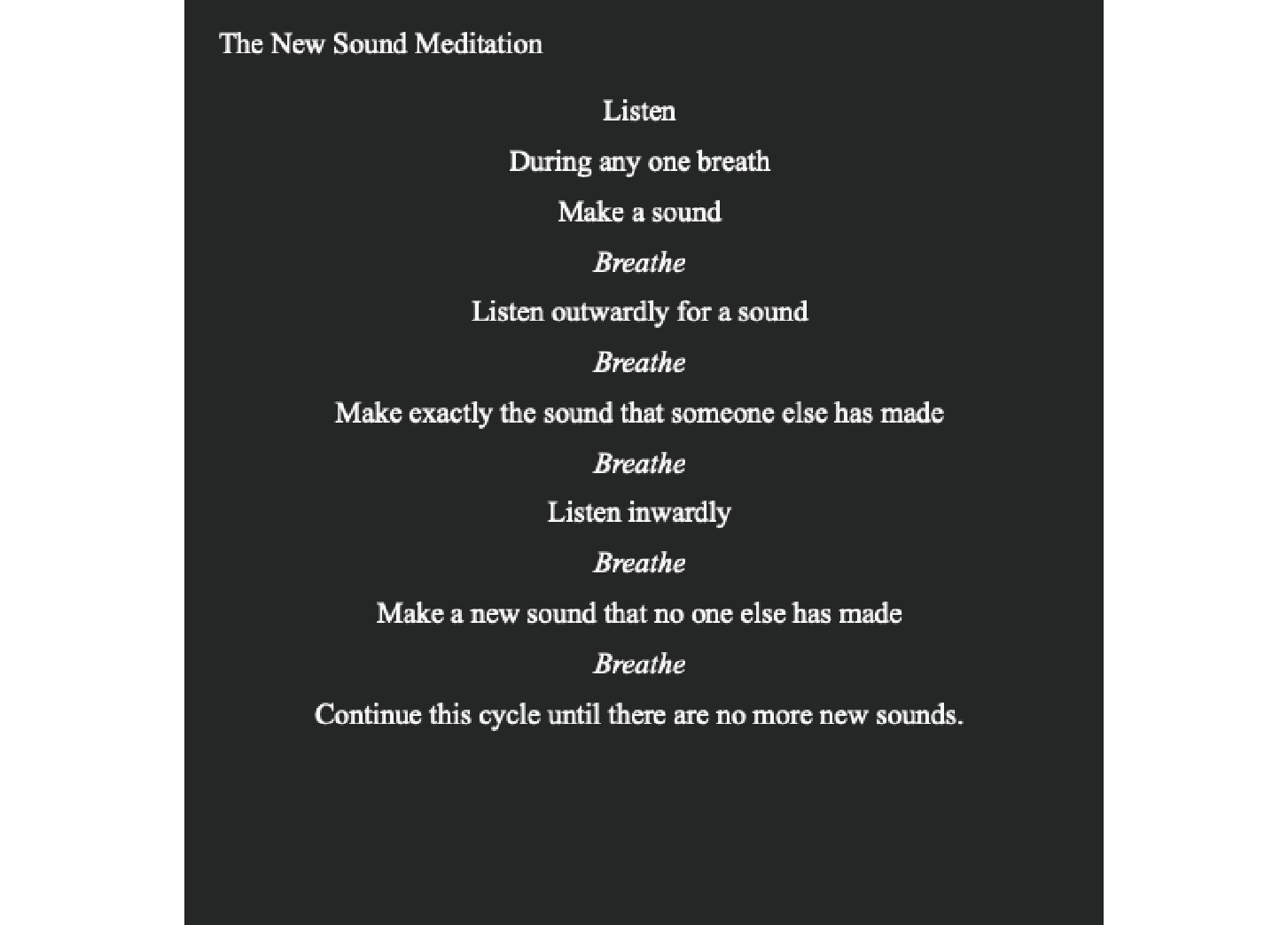
Pauline Oliveros, The New Sound Meditation, 1989
Bureau for Listening is a collective band of listeners, dedicated to promoting listening as a critical, empathic and artistic practice. I've been referencing their walking scores as inspiration for my soundwalks, as they house a wide range of listening exercises by sound artists like Max Neuhaus and Yoko Ono.
I'm also not very good with words myself, so their archive of listening scores and instructions has been very helpful for me in constructing my own variation of listening scores for my soundwalks.