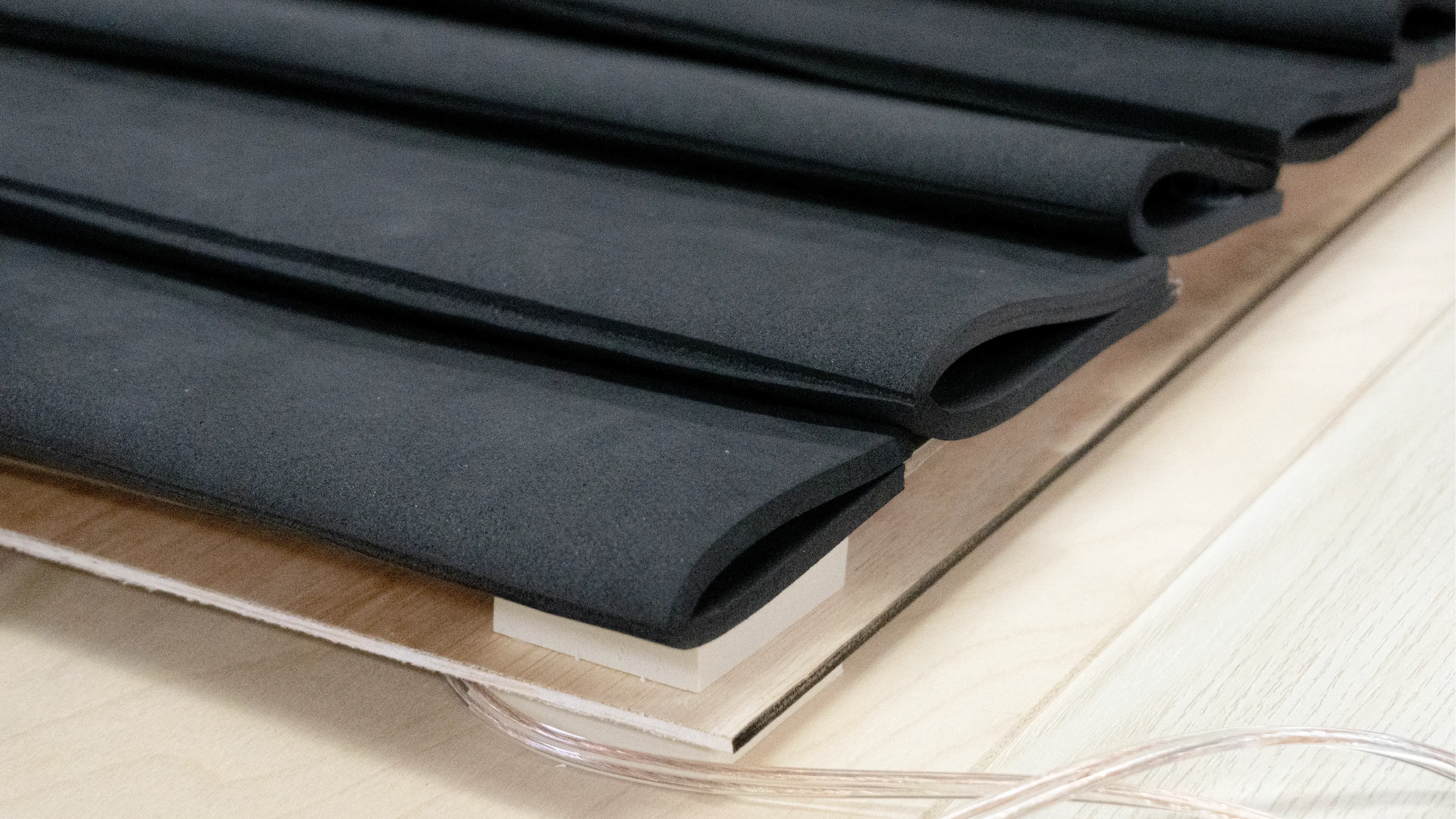
Trial with EVA foam
Looking back at my previous experiment, Intimate Acoustics
While semester one was a whirlwind of ideating and experimenting, this semester, I decided to take it slow and sit down to work on the previous experiments I did back then. One that I decided to carry on further with was Intimate Acoustics.
To recap, I did a series of noise sequences created out of various found objects, such as glass, trash, and nature. It was interesting, but I wasn't very satisfied with it. Everything felt very randomised, and the objects were moving as they were. As an audience member, I was simply watching a spectacle. I was not playing an active role in it.
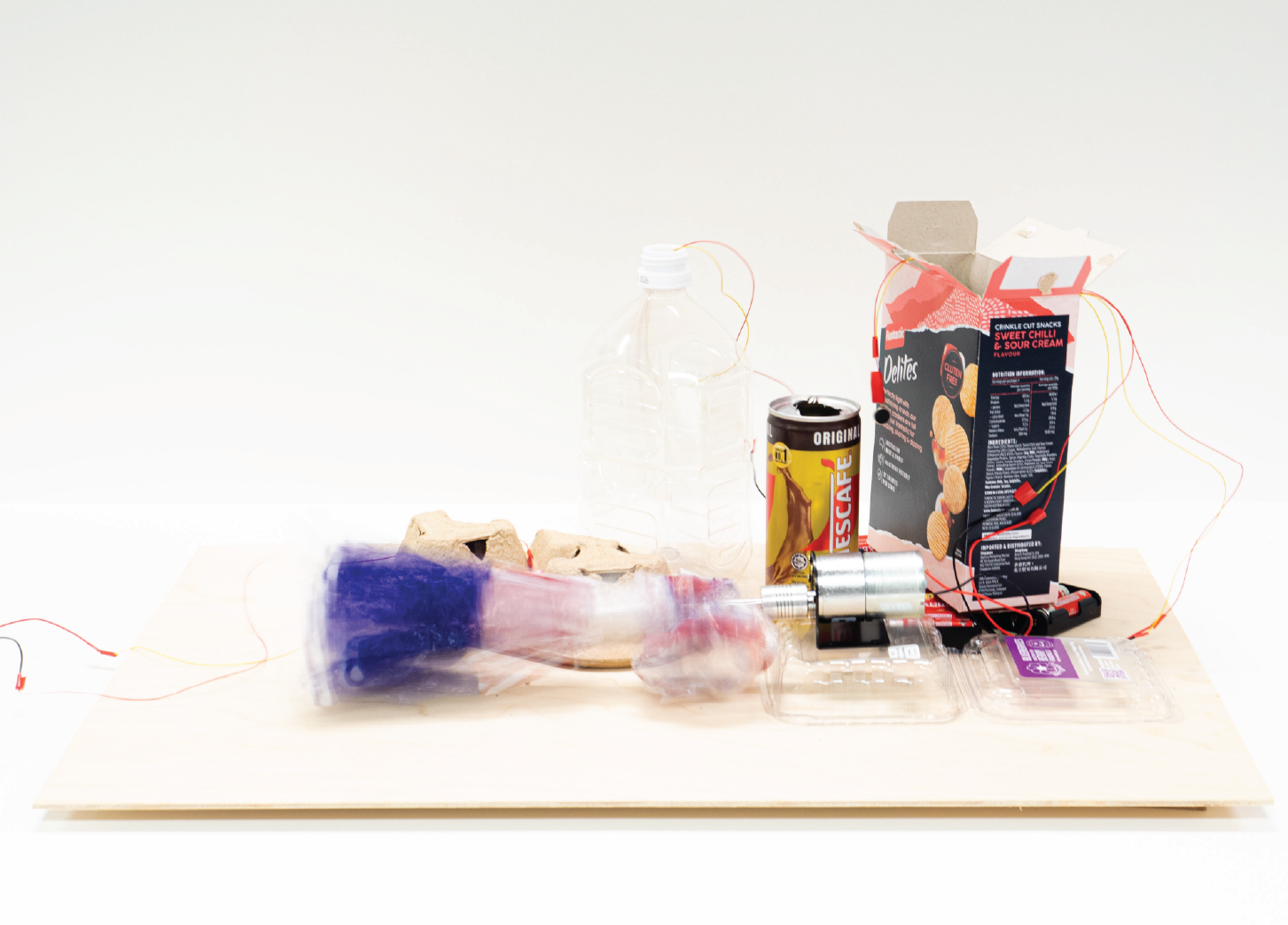
Semester one's sound sequence, "Trash"
Technicalities-wise, the vibration motors were doing most of the noise-making, which felt underwhelming. The found objects weren't "activated" in the subtle way I wanted them to be, and I felt that the selection could be more carefully curated. Everything felt a little too random, and the motors and objects weren't producing the smaller, intimate acoustic sounds I wanted to hear.
In my next iteration, I would like to put more thought into the objects I select, and to put more work into finetuning the sounds they create. Another question to consider is: how may the audience play a role in this noise-making?
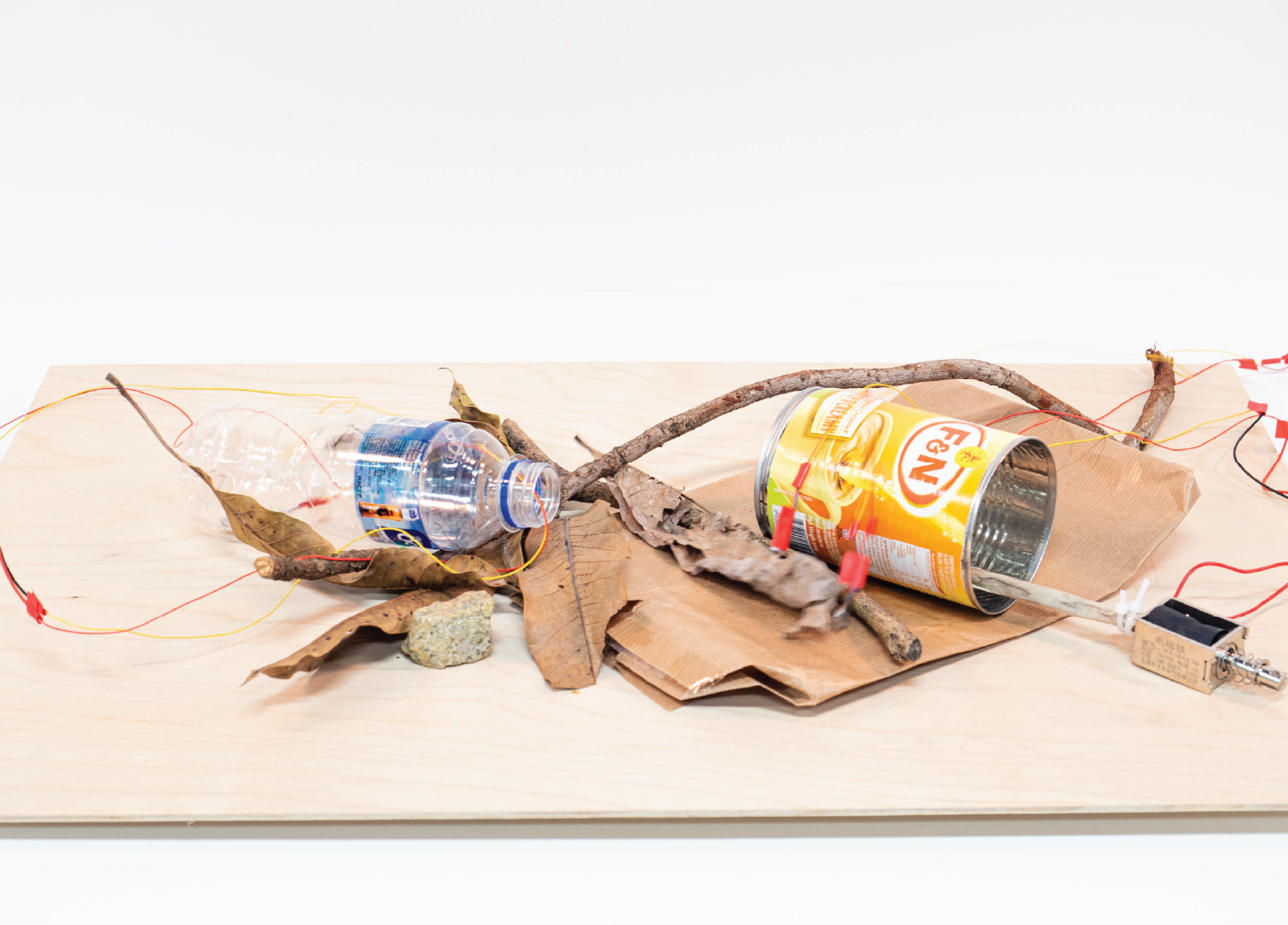
Could there be some sort of interaction to add to this?
Working towards a more interactive experience
Instead of three separate sequences, I decided to try combining everything into one big platform. Thinking about it, the whole reason Intimate Acoustics was born in the first place was the fascination with the smaller sounds in life; the sounds that require us to go closer or pause to listen to them.
With this in mind, I added an ultrasonic sensor to the mix to sense people's presence and trigger movement or sound. An initial experiment with the sensor included sensing presence to trigger the motor's movement:
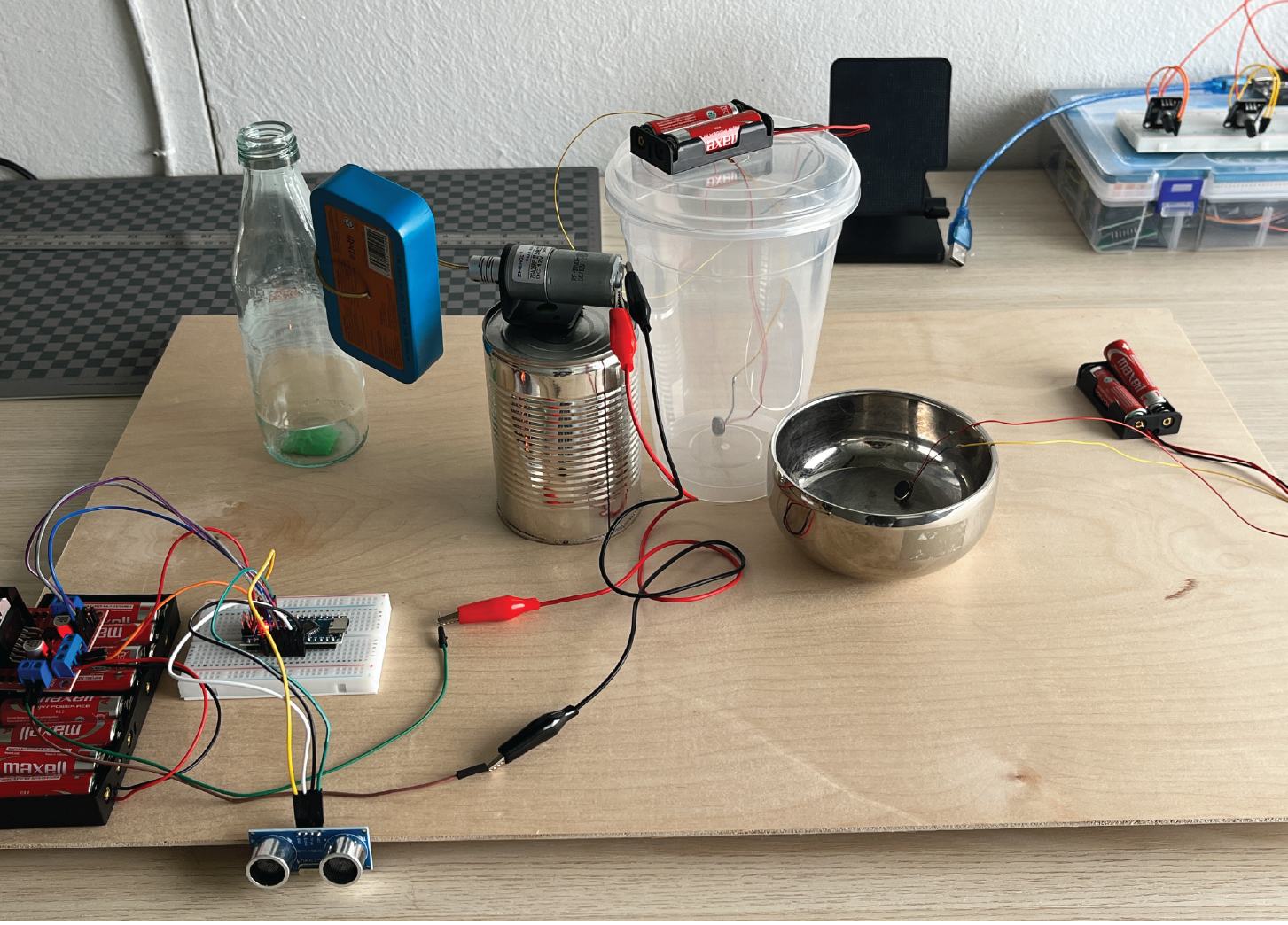
Arranging found objects on a central platform
After this initial experiment, I went ahead and used a few found objects, arranging them on a flat piece of wood and attaching motors to them. The process is a little hard to explain here as there is no set plan on how to actually make sound with the objects; I create the sound as I combine the motors with the object itself, and the results are often unpredictable.
Combining the ultrasonic sensor with four motors (vibration and DC), I assembled them on one platform. After a bit of configuration and testing, I arranged everything such that whenever one goes near the sensor, the motors are activated, in turn coming into contact with the various objects to create a series of sounds. The final result was a mix of wires, motors and objects – i’m not quite sure if I like it yet.
Moving back to the vibrational "pillow"
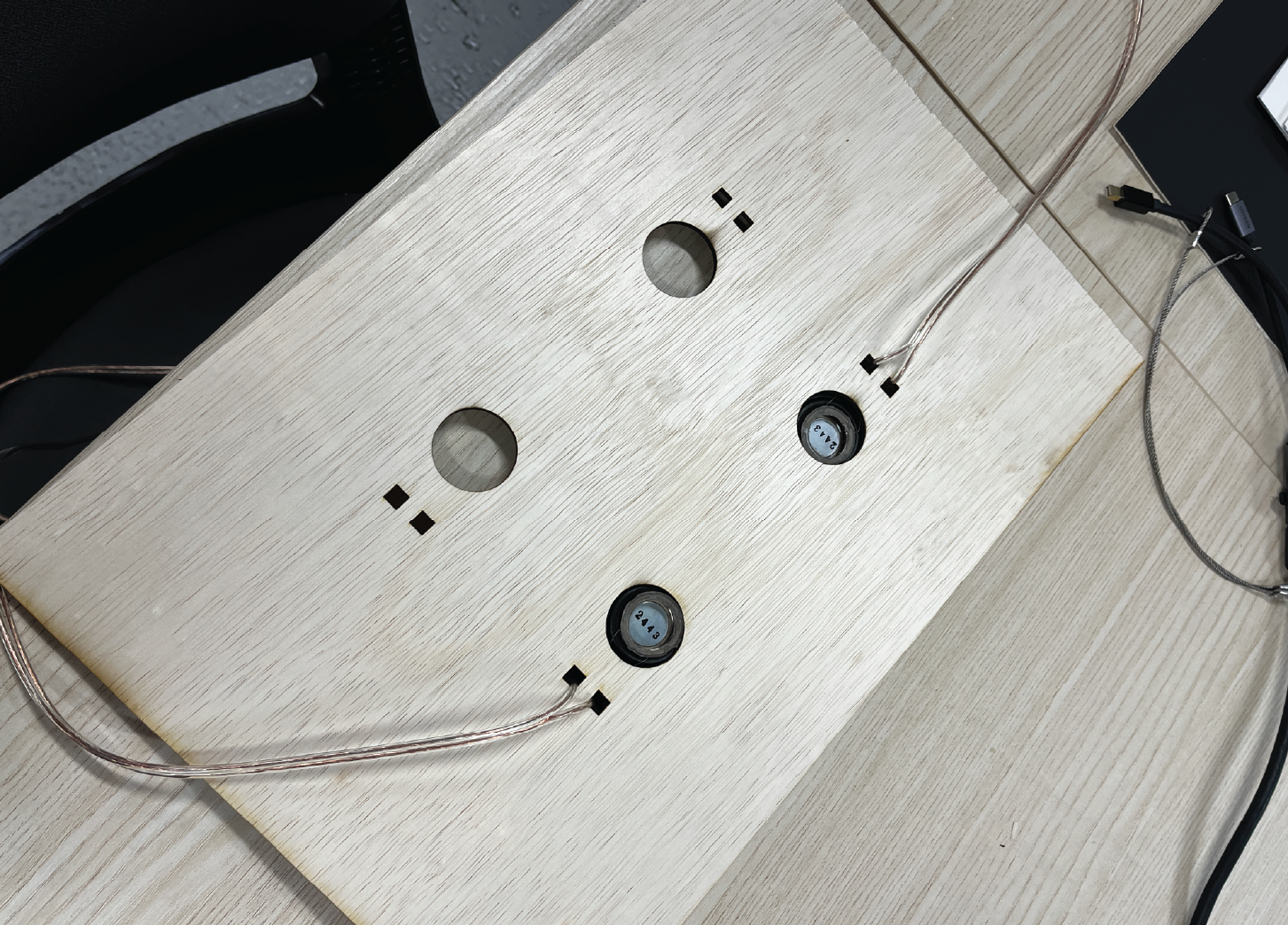
This week, we got the chance to use the laser cutting room, so I decided to try using wood as a base for the exciters. With exciters, understanding which material amplifies vibration best still remains a mystery until I actually test them out myself. So I went ahead and cut rectangles from wood, with small holes in them to better attach the exciters onto the platform, since the double-sided tape wasn’t working well enough.
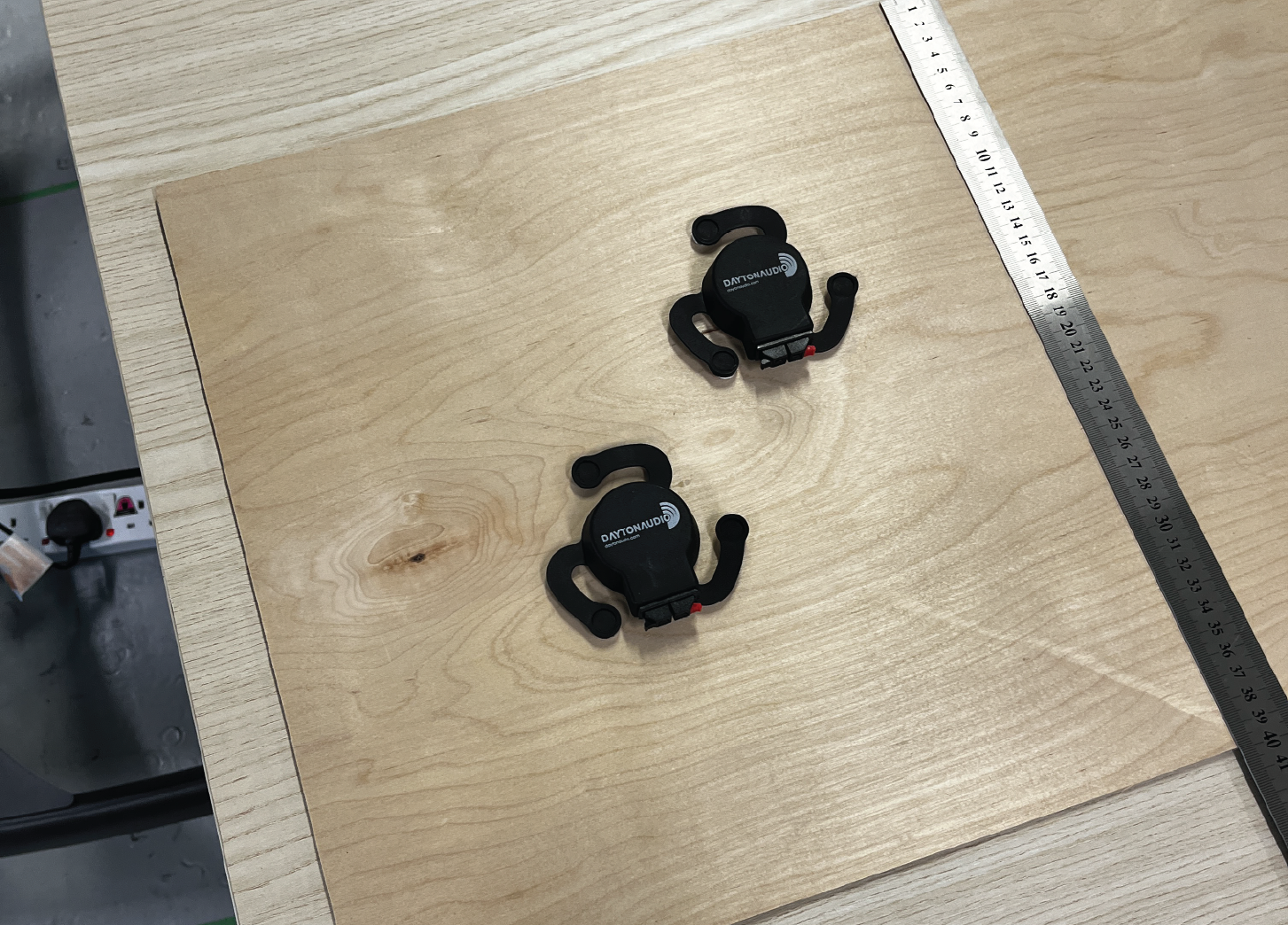
Understanding how to mount the exciters
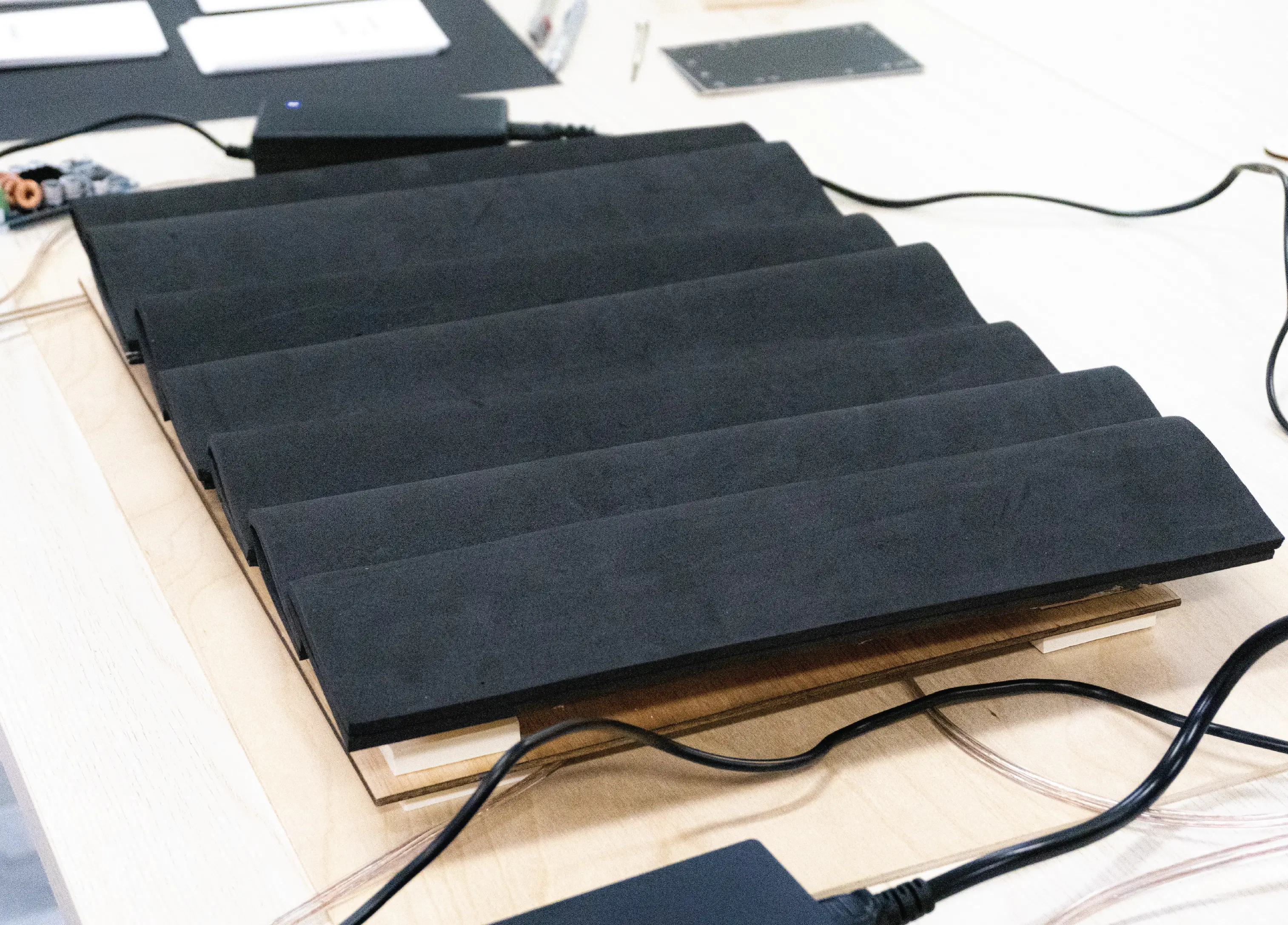
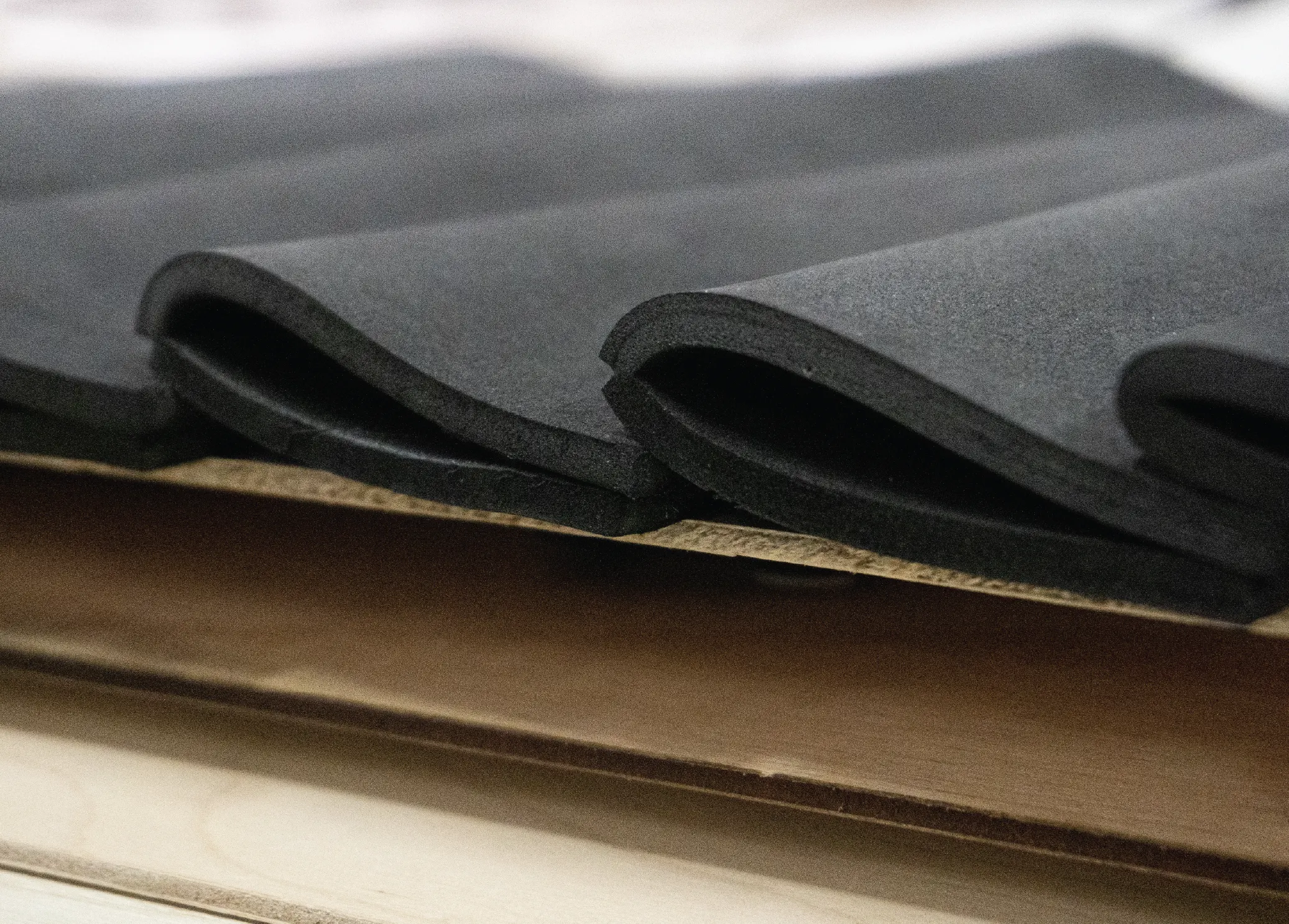
This time, I attempted smaller rolls with the EVA foam as well, packing the foam tight so that the sound could pass through better. I adopted this rolled-up approach as I still wanted it to resemble the look of a pillow. The end result wasn’t very soft, to say the least. The blackness of the foam also felt off-putting, though I have to say that vibration-wise, it was pretty strong!
Despite the strong vibration quality, the wood, in contact with the exciters, produced hollow sounds and slight tapping which felt unpleasant. In fact, the vibrations thudded against the wood, which was the opposite of what I intended, as the thudding felt too abrupt and not gentle. Ah well, a good test run I suppose. I’ll probably try a different material the next round, or attempt thicker wood.
Talks & Thoughts
I talked to both Jo and Andreas this week, so I got a mix of varying responses, but still got good feedback nonetheless.
EVA Foam platform
Intimate Acoustics
Regarding the objects and overall presentation, the consensus was that the objects could be made to look more presentable. Right now, everything feels clumped together, so I could try spacing things out for some breathing room.
What I could also try is adding some depth, such as platforms or cut holes to hide the wires. Funnily enough, Andreas thought the appearance of the wires was alright; it gave it a unique DIY look which complemented the randomness of the objects. In my opinion, the wires felt a little messy, but perhaps if I tidied them up, they could form part of the final work…who knows?
And finally, the sounds. They are still too loud, too janky. The vibration motor in the plastic bottle is quite loud, but the DC motor spinning is still acceptable. I think it also has to do with speed, and how soft or hard each material is.
To sum it up, I'm still looking to curate and arrange the objects in a way that is simple to follow through with: intentional choices, intentional sounds. Jo left me with a reminder: select the materials I want to work with carefully, especially considering the sounds they can make. Currently, I've selected a series of hard-surface objects, which produces discomforting sounds when in contact with the motors.
Vibrational Ground:
For Jo, as a first-time viewer of my project, she was quite fascinated with the tactile vibrations she could feel through the EVA foam. However, she found that the look right now reminded her, very specifically, of the toilet walls vibrating and thundering at a club, hahaha.
Now on to the visual aesthetics of things: the rolled-up look of the foam resembled rooftop tiles too much, and the black look of it all didn't seem to tie in with my other experiments. Especially since my soundwalk is more nature/outdoors, and Intimate Acoustics uses foraged objects. Now the bed feels too rigid, so the question is: what do I want people to feel when they see or touch the work? Inviting, soft, or soothing?
This is when I finally understood what it means to tie everything together, and why the lecturers were telling me that all my "objects" exist as separate entities. They are all different visually, belonging to separate categories. This is when I realised that it's not just about the visual language and branding of it all, but also boils down to material choice.
I need to be more intentional about the materials I choose and how they tie into my whole narrative of being connected to my surroundings through sound. A lot more thinking and questioning to do, for sure!
To end this week:
“Low-frequency sound has the capacity to touch bodies and offer what I call a vibrational experience. Invisible to the eye, yet immediately noted by the body, the sonorous touch embraces bodies and spaces. These long sound waves are capable of filling the air with pressure while caring about the bodies. To feel touched and hugged by sound waves. Our skin feels, and our body listens to this unique sound massage enabled by low-frequency sound waves and subwoofers. “
– Quote from an interview featuring Stefanie Egedy