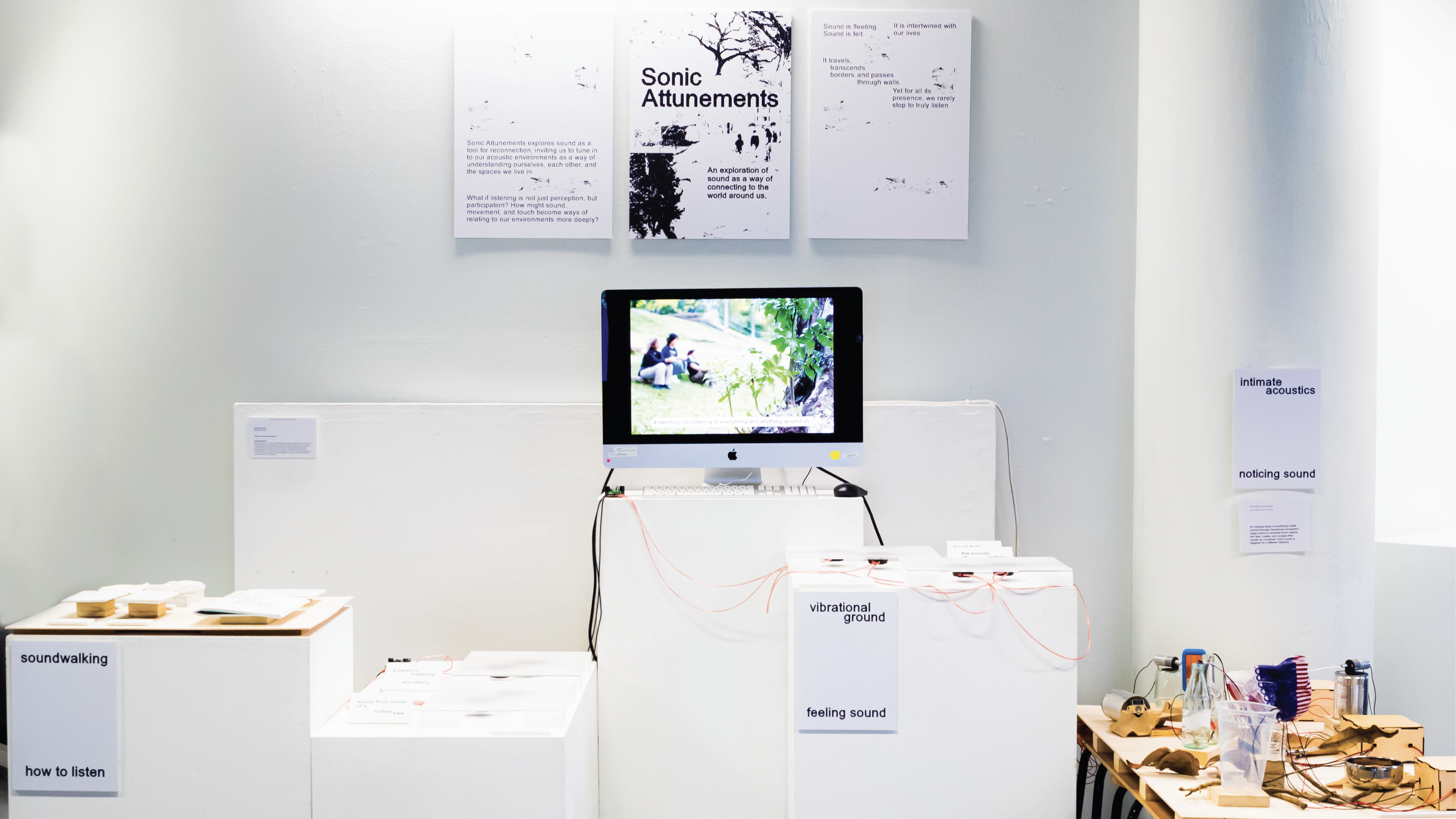
Open Studios Setup!
A time of reflection
Open Studios was a blur of events, but also a fulfilling and memorable one. For one, I did not expect a constant flow of people streaming in and out of the studio, so I was constantly at my setup, explaining things to people or just keeping watch over the electronics. Despite the mad rush and stress for this, it was deeply rewarding to see visitors interact with my stuff. I guess working on the project for a long time made me forget about the joy of interaction; I had approached the topic of sound from a curious standpoint at the beginning. It felt like it began to fade amidst the stress and rush of things. I found that by seeing others interact with my work with wonder, I was brought back to the reason why I chose to work with sound in the first place - the vibrations, the sensation of listening to different sounds
around us.
General Observations: Many people were drawn to the Intimate Acoustics setup. I noticed that they were interested by the assortment of random, familiar objects on the table, and were tickled by the idea that their presence could trigger movement.
Visitors interacting with the work
Less people were entertained by the vibrational platforms I feel. I guess it also has to do with my overall setup; Soundwalk first at the left, followed by the platforms in the middle, then the tiny sounds on the right. Initially, I wanted it to be soundwalks first (How to listen) , followed by Intimate Acoustics (Noticing sound), then Vibrational Ground. (Feeling sound). I do think that because of the noisiness and constant movement triggered by the Intimate Acoustics setup, it took some attention away from the other two – something I’m not ticked about,
simply amused.
When it came to explaining my stuff for the Soundwalk, including what happened during the walk and how it was expressed into clay and writing, I’ll admit that my explanation fell a LITTLE short. Since my whole setup included 3 main sections – in which each already had quite a fair bit to talk about, I found myself going through each part in summarised sentences. Which isn’t so bad, but I think for the Soundwalk, the way I presented things could have been clearer. Especially for someone who’s never heard of soundwalking before, I think I could have elaborated on its importance and practice a
little better.
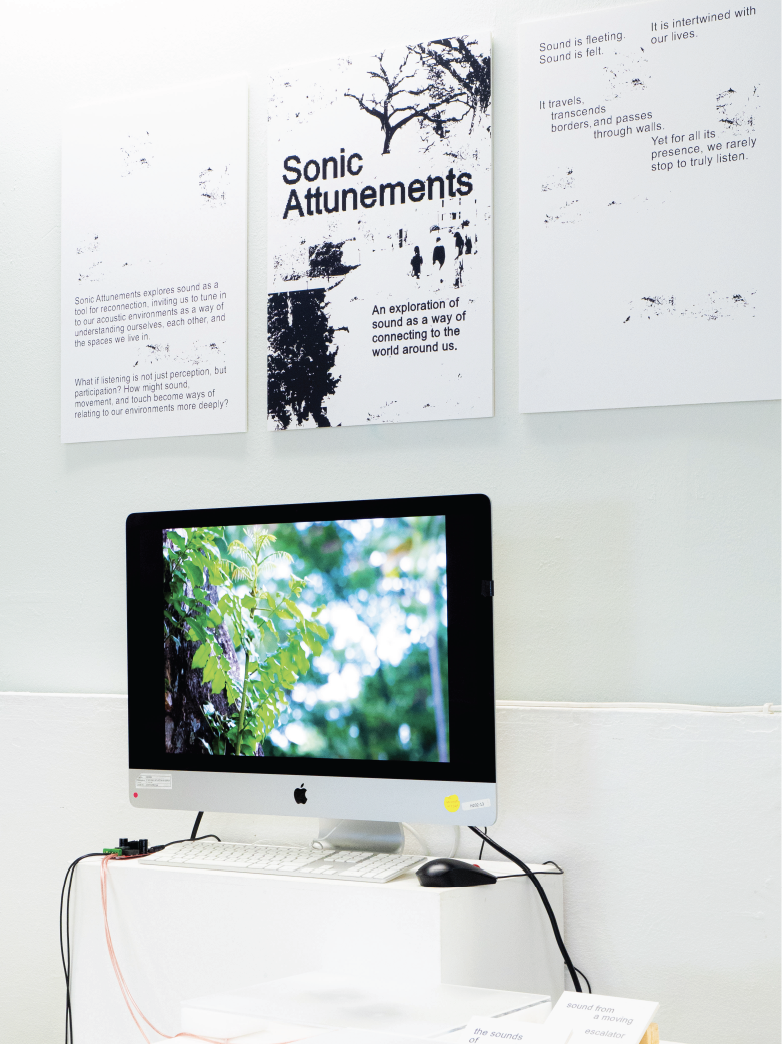
Concept Video
As for the vibrational platforms, I noticed people hesitating to touch them despite the instruction written beside it. I guess because I used a matte acrylic panel instead of the foam I initially wanted. Some commented that they liked the texture of the matte acrylic though. Some were quite amazed by the vibrations they could feel; and others asked me about the recording process, the exciters, and what made the vibrations work. It felt really nice explaining the work process behind everything to others! A few juniors were thinking about joining the computation atelier so they were keen to know about the wiring and all, which I was glad to share with them about.
The tiny sounds, Intimate Acoustics, got the most response from the crowd, which was quite unexpected for me. Everyone was amused by the interactions with the moving objects, and some remarked that it reminded them of the game “Dance Dance Revolution”. I showed students some of the wiring, and explained the idea behind using found objects to create tiny sounds. Sound wise, I know that there’s a lot of improvement that could be made to mimic the idea of “knocking, tapping and rustling”, so I will be working on that towards viva voce.
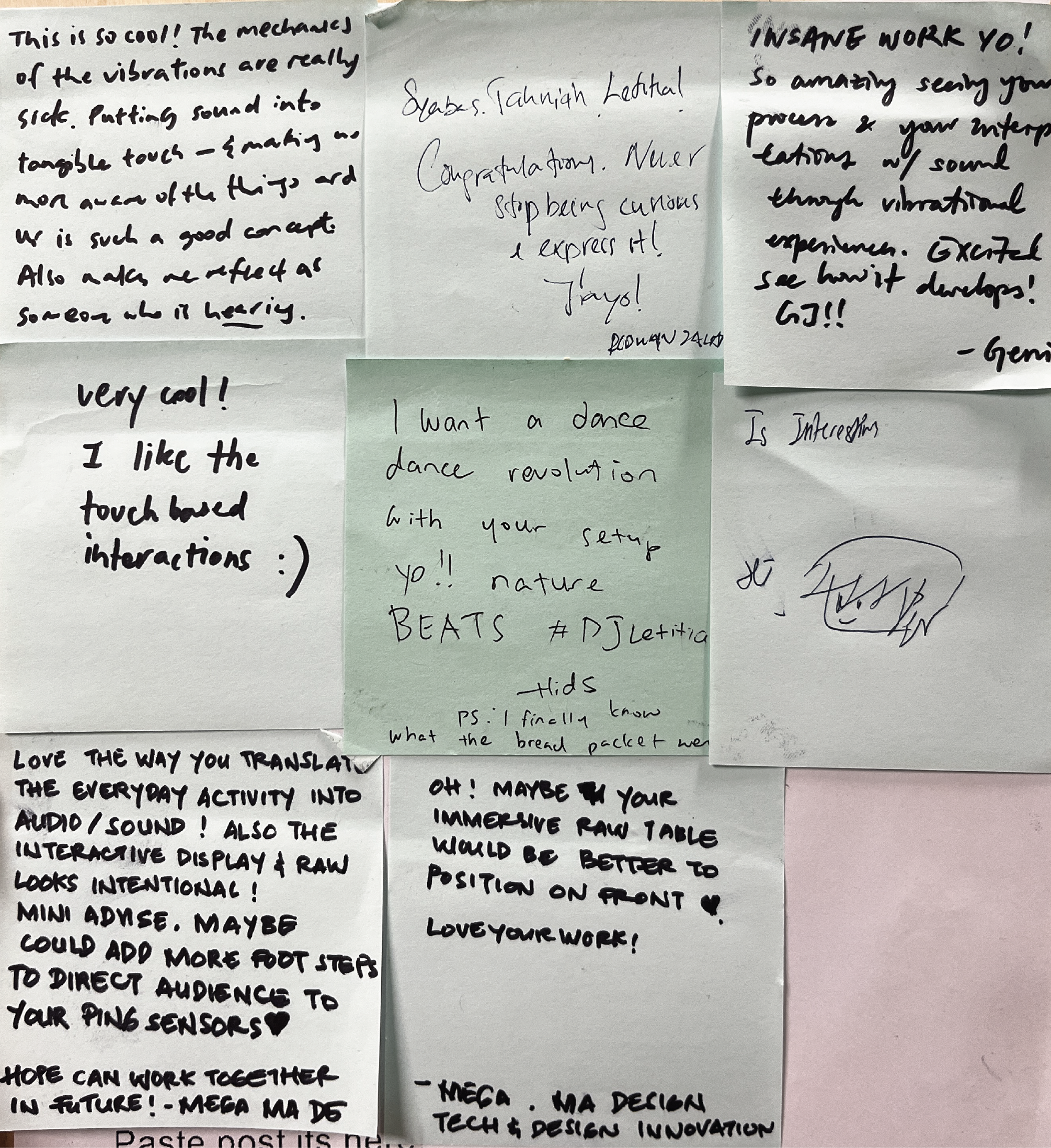
Written feedback
I guess presentation and explanation wise, my time with an average visitor ranged around 5-7 minutes, not super long but an okay amount of time to explain my work. I didn’t get a lot of constructive feedback from the post its - the most insightful feedback came from talking with others, especially the lecturers and the sound artist Syafiq Halid. Overall, still worthwhile getting different perspectives from various people,
which I will think about leading up to the
final submission.
I didn't get much from the written feedback. The most useful comments came from talking to people in person. What I found particularly interesting was how divided opinions were on the question of visual context, especially for Vibrational Ground. Tito, our Year 1 lecturer, thought the vibrations on the platforms worked well, but felt the context behind the sound, for example, "sound of a hollow tree" wasn't strong enough. He suggested a screen or image beside the platform might help explain the vibration he was feeling.
On the other hand, when I spoke with Carissa's sound artist friend Syafiq Halid, he felt the sound by itself was more than enough. There was no need for additional context. The sound was the context, and since my project centred sound as the medium, the simple title placards were doing the work they needed to.
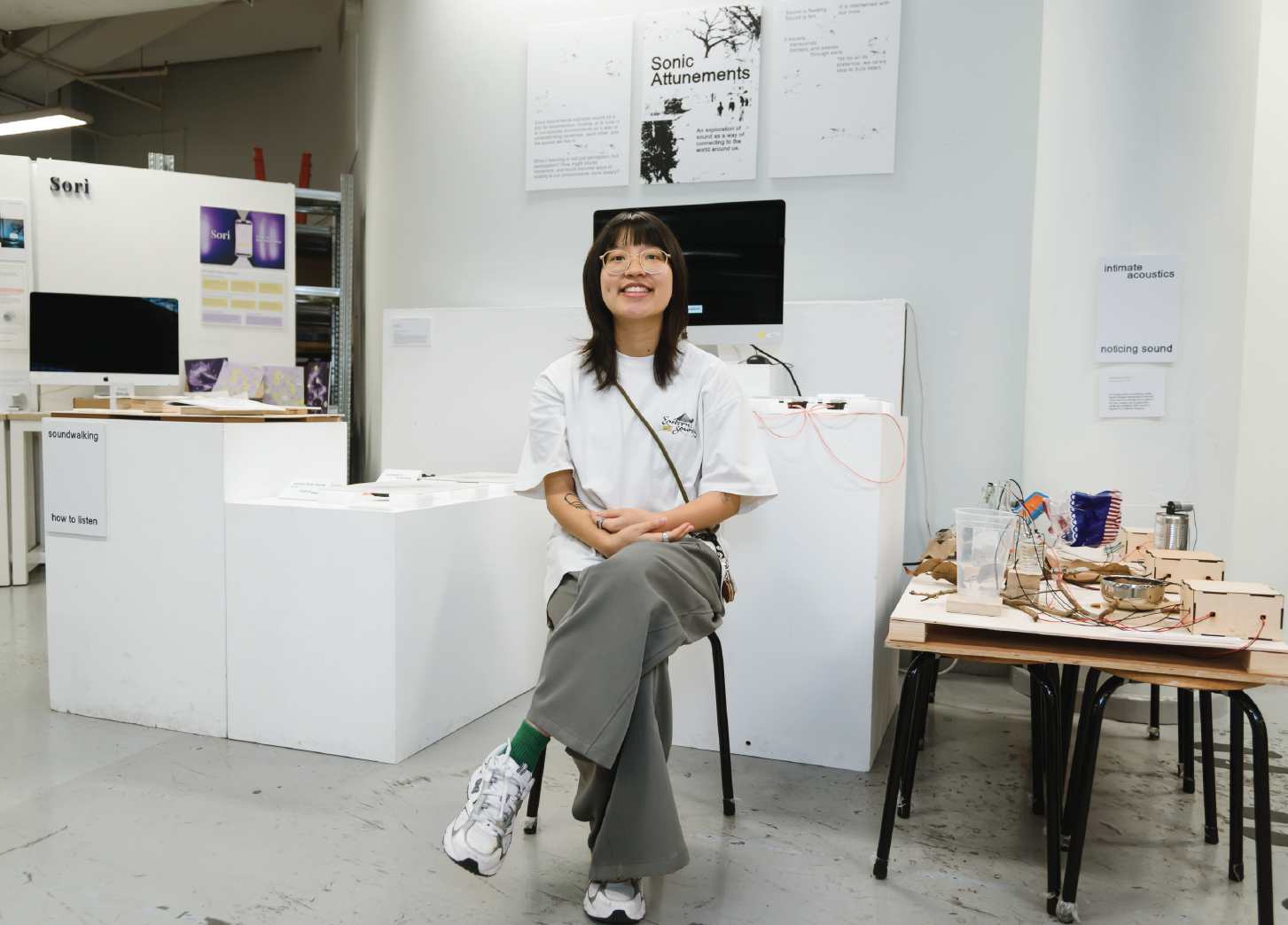
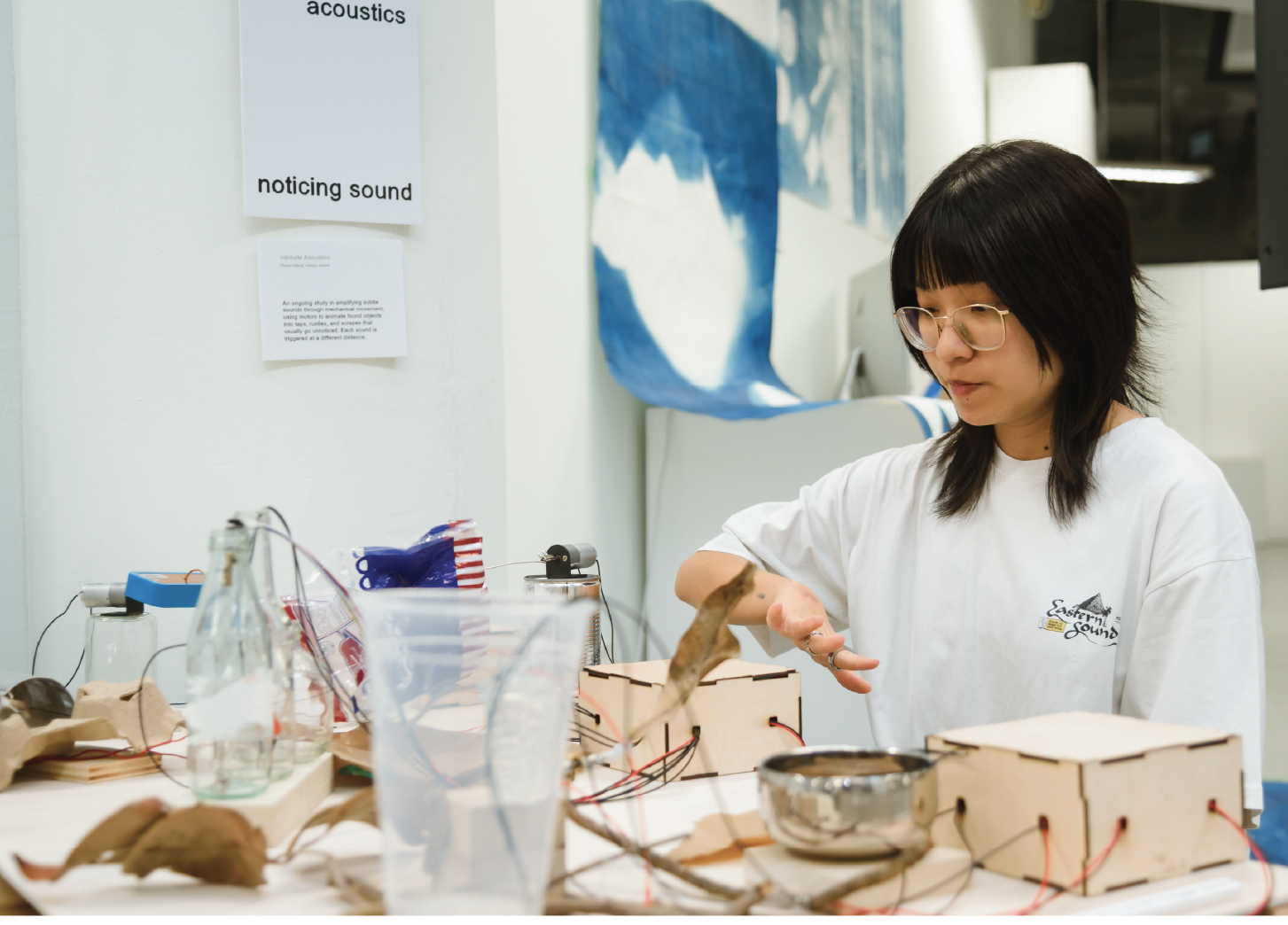
Photo credits to Jared! Thank you for the lovely photos